
'There is a very dangerous trend that is happening silently where the young depend on AI instead of their elders, or anybody else for that matter, thinking AI is better. It is absolutely not.'

Indian equity benchmarks Sensex and Nifty experienced a decline in early trade, primarily due to a sell-off in power and metal stocks, mirroring a broader downturn across Asian markets. Elevated crude oil prices and firm US bond yields further dampened investor sentiment, while an expert warned of an impending correction in overvalued mid and small-cap segments. Track Sensex, Nifty on October 22.

Indian benchmark indices Sensex and Nifty closed higher, driven by a correction in crude oil prices and significant buying interest in blue-chip bank and financial stocks, despite some profit booking after a recent rally.

Artificial intelligence company Anthropic has officially launched its initial public offering (IPO) roadshow, aiming to raise up to USD 64.35 billion by offering 825 million shares at an expected price range of USD 70 to USD 78 per share. The company plans to list its Class A common stock on the Nasdaq Global Select Market under the ticker symbol 'ANT'.

Born and raised in Agra, Uttar Pradesh, Sonia Balani graduated from St John's College before pursuing a career in acting. She made her television debut with Suvreen Guggal - Topper of the Year in 2012 and went on to feature in popular shows like Bade Achhe Lagte Hain, where she played Peehu Kapoor Shergil, and Tu Mera Hero, which brought her wider recognition as Panchi. She later took on the role of Detective Bunty in Detective Didi, showcasing her versatility beyond conventional television heroines.

Leading dairy companies in India have increased retail milk prices by Rs 4-8 per litre in the current fiscal year (FY27), an unusually steep rise attributed to surging procurement costs, constrained supplies, and elevated processing expenses, according to a CareEdge Ratings report.

Indian benchmark indices Sensex and Nifty surged significantly in early trade, driven by a sharp decline in crude oil prices and optimism surrounding a potential resolution to the West Asia conflict following the US midterm elections, which saw the Democratic Party gain control of Congress. Track Sensex, Nifty on November 5, 2026.

Indian benchmark equity indices, Sensex and Nifty, ended sharply lower, with the Sensex tumbling 876.37 points and the Nifty dropping below 22,900, primarily due to a decline in private bank stocks like HDFC Bank and Axis Bank, alongside weak global market trends.

Indian benchmark equity indices, Sensex and Nifty, closed lower for the fourth consecutive session, driven by a surge in crude oil prices above USD 114 per barrel due to escalating tensions in West Asia, coupled with broad-based selling and FII outflows.

Melcow Pondicherry offers neither enough laughs nor scares to make this horror-comedy worth the trip.

Foreign Portfolio Investors (FPIs) have withdrawn Rs 44,166 crore from Indian equities in October, pushing the total outflows for the year past Rs 3 lakh crore, driven by elevated crude oil prices, a stronger US dollar, higher US bond yields, and the allure of AI-led rallies in North Asian markets.
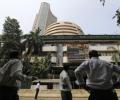
Analysts predict that the US midterm election results, which saw Democrats gain control of Congress, will primarily influence Indian markets through changes in global financial conditions, trade policy expectations, and geopolitical developments, with a keen focus on the US administration's actions in West Asia and their potential impact on crude oil prices.

'You cannot say on day one that a stock is a multibagger. Multibaggers evolve.'

'My recommendation: Stay in your job. Don't make it your dream job for life.' 'Then use your nights, weekends and holidays to build something on the side -- something you're passionate about, something you'd love to do -- without putting any pressure on yourself to earn money from it from day one.' 'It may take six months, 12 months, maybe even two years, but it will unlock something you won't know how to value until you experience it.'

Private corporations in India invested approximately 30.3 trillion in fixed assets during FY25, marking a 7 per cent increase from the previous year, according to the statistics ministry. This growth in private capital expenditure contrasts with a slowdown in government capital spending.

Karnataka IT Minister Priyank Kharge reviewed preparations for the 29th Bengaluru Tech Summit 2026, themed "AI & Beyond." The summit, scheduled for November 17-19, 2026, will feature over 1,800 exhibitors, focusing on AI, DeepTech, biotechnology, electronics, robotics, and startups, aiming to foster innovation and collaboration.
Indian benchmark indices Sensex and Nifty saw a sharp rebound in early trade, driven primarily by a rally in IT stocks and a decline in crude oil prices, even as global markets faced selling pressure due to US inflation concerns. Track Sensex and Nifty on

India's Indo-Pacific approach has traditionally emphasised strategic autonomy, ASEAN centrality, freedom of navigation, respect for international law and an inclusive regional order. Its growing defence and maritime partnerships with Australia, Japan, Indonesia, Vietnam and other Southeast Asian countries provide additional depth to this approach, point out Dr Kumar and Dr Jasmeet Kaur.

Indian jewellers reported robust demand for gold and silver on Dhanteras, with gold sales by value estimated to increase by 15-20 per cent to approximately Rs 60,000 crore, driven by a recent drop in prices. However, volumes are expected to remain flat compared to last year due to overall higher price levels.

Foreign portfolio investors (FPIs) have withdrawn nearly Rs 5,109.21 crore from Indian government securities under the fully accessible route (FAR) in just three days, driven by global uncertainty, elevated crude prices, rising US Treasury yields, and a depreciating rupee.

Foreign portfolio investors (FPIs) have injected Rs 30,919 crore into Indian equities in August, marking their second consecutive month of net buying. This follows a Rs 20,200 crore investment in July, indicating a potential reversal after four months of significant outflows, driven by improving corporate earnings, resilient economic activity, and a stable rupee.

Rental yield can indicate whether a property is undervalued, overvalued or fairly valued.

Indian stock markets witnessed a significant rally, with the Sensex soaring 905 points and the Nifty topping 22,900, primarily driven by strong buying in banking and FMCG shares, coupled with easing crude oil prices and a US Fed rate pause.

J&K Bank MD and CEO Amitava Chatterjee defended the surcharge on UPI transactions above Rs 2,000, stating it is necessary for the system's long-term sustainability. He also discussed the shift of household savings to mutual funds, the bank's profit growth, and India's consumption-based economy.

Indian equity benchmarks Sensex and Nifty rallied up to 1 per cent in early trade, driven by strong performance in IT stocks, Reliance Industries, and favourable global market sentiment, rebounding from previous losses.

The RBI can slow the rupee's fall, but lasting stability depends on tackling the root causes of depreciation and attracting foreign investment.

India's frontier model company Sarvam secured a dominant 87% share of the total funding received by the country's startups building artificial intelligence (AI) for Indian languages in 2026, raising $345 million out of a total of $399 million, according to a Tracxn report.

Small and medium enterprise (SME) initial public offerings (IPOs) in India are significantly underperforming mainboard listings, with 81 out of 161 SME IPOs trading below their issue price this year, and a median return of -0.2 per cent compared to a 24 per cent gain for mainboard issues.
Foreign Portfolio Investors (FPIs) have significantly increased their investment in Indian equities, infusing Rs 23,544 crore in August, driven by improving quarterly earnings, a stable rupee, and positive market prospects.

Mid and smallcap mutual fund schemes in India have quadrupled their assets under management (AUM) to 10 trillion in five years, driven by strong investor inflows and market gains, with experts anticipating continued growth despite mixed valuations.

Analysts predict that crude oil prices, geopolitical tensions in West Asia, and upcoming inflation data will be the primary drivers of the Indian stock market this week, alongside foreign investor activity and domestic quarterly earnings.

As many as 15,000-20,000 frontline retail jobs have reportedly been rationalised, with further cuts feared.
Indian benchmark equity indices, Sensex and Nifty, significantly recovered from sharp early losses, driven by buying in State Bank of India and Reliance Industries, alongside fresh foreign fund inflows, despite declines in Axis Bank and HDFC Bank.

Avenue Supermarts (DMart) reported lower-than-expected Q2FY27 performance, with revenue growth of 18.4 per cent year-on-year but visible margin pressure, leading to a 4.5 per cent stock drop. The company faces challenges from lower-margin sales, operating cost pressures, and aggressive store expansion, impacting profitability despite improved same-store sales growth.

Tata Consultancy Services (TCS) plans for 80% of its new hires to possess digital and Artificial Intelligence (AI) skills, anticipating that the growing share of AI-led work will significantly boost its profit margins.

'In fact, when monetary policy has been deployed, it does not distinguish between types of shocks. It goes straight for the kill.'

India does not need to win the model race to win the AI era. It needs to be the country that cannot be switched off, can be trusted by its citizens, and is useful to the rest of the world, asserts Rajeev Srinivasan.
Indian benchmark indices Sensex and Nifty closed higher for the second consecutive day, primarily driven by robust buying in IT stocks following strong quarterly results and positive global trends. Tech Mahindra notably surged over 8% after reporting a significant jump in net profit.

The IDBI Bank stake sale could generate over Rs 26,500 crore, helping the government surpass its annual divestment target, notes A K Bhattacharya.
Indian equity benchmarks Sensex and Nifty extended their losses for a third consecutive session, with the Sensex declining 460.30 points and the Nifty dropping 123.70 points, primarily due to surging crude oil prices driven by escalating tensions in West Asia and weak global cues.
